
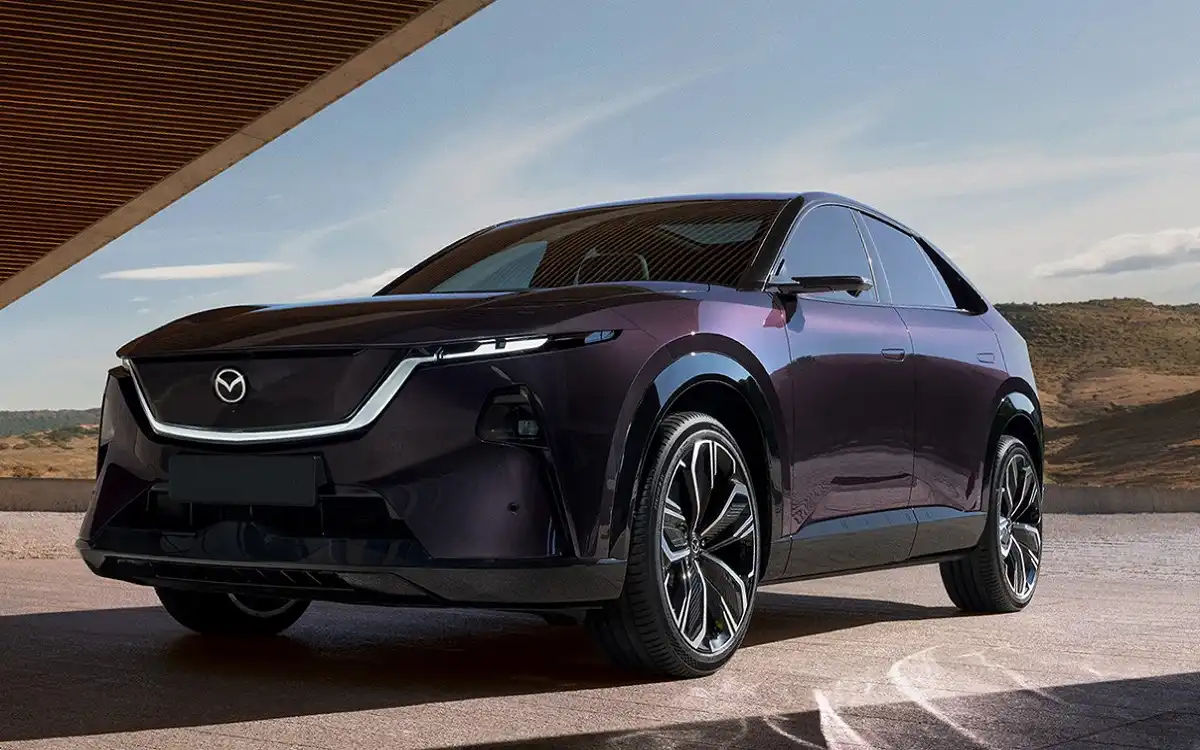
Mazda is one of those car companies that just refuses to do things the normal way. While every other brand is putting all their money into big batteries and electric motors, the folks in Hiroshima are still obsessed with the internal combustion engine. They gave us the rotary engine when everyone else said it was a bad idea, and they gave us the Skyactiv-X which tries to make gas act like diesel. Now, in 2026, we are looking at something even weirder. It is a six-stroke engine that actually makes its own hydrogen fuel while you drive.
The car world was a bit shocked when the news of the mazda hydrogen six stroke engine patent first hit the internet. Most people know how a normal car engine works, it has four steps which are intake, compression, power, and exhaust. But Mazda thinks that adding two more steps can solve the big problem of carbon emissions without making us give up the sound and feel of a real engine. It is a bold move, and honestly, it is exactly the kind of “mad scientist” engineering we expect from them.
In this article, we are going to dive deep into how this thing actually works. We will look at the latest updates from 2026 and see if this is just a cool idea on paper or something you might actually buy in a few years. It is a complicated system, so we will try to keep the language simple and skip the heavy textbook talk where we can. The goal is to understand why this mazda hydrogen six stroke engine patent matters for the future of cars.
Mazda CX-70 Preview – Will It Launch In USA
Before we get into the gears and valves, you have to understand why they are doing this. Mazda believes in a “multi-solution” approach. They know EVs are great for some people, but they also think that cleaning up the engines we already have is just as important. This new patent is their attempt to create a car that runs on gasoline but puts out almost zero bad stuff from the tailpipe. It sounds like magic, but it is actually just very clever chemistry happening inside the cylinder.
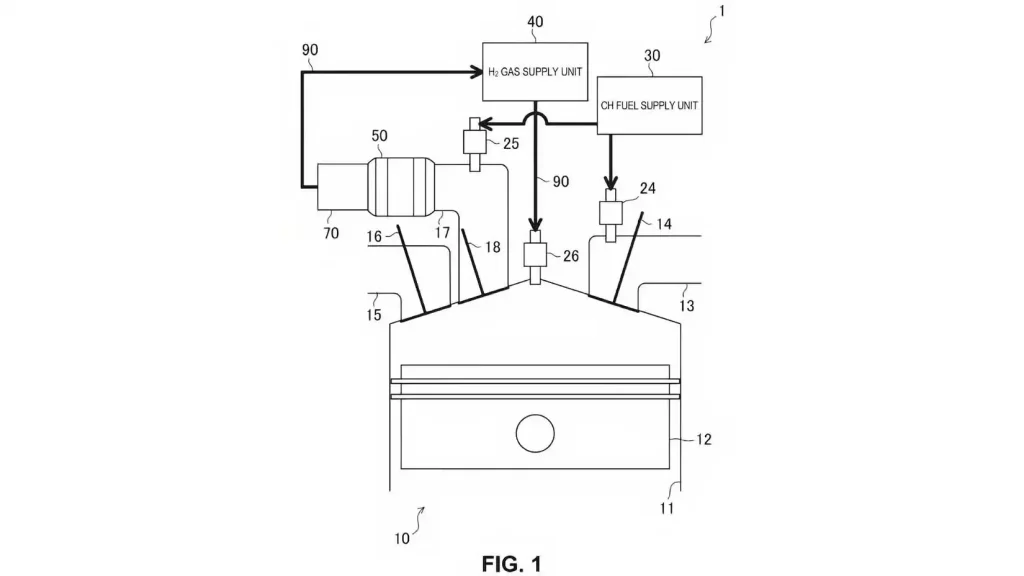
How the Mazda Hydrogen Six Stroke Engine Patent Works
To understand the mazda hydrogen six stroke engine patent, you first have to remember how a standard engine functions. In a four-stroke engine, the piston goes up and down twice for every single power explosion. It sucks in air, squishes it, blows it up, and then pushes the burnt gas out. Mazda’s new design keeps those first three steps but changes the game at the very end. Instead of just throwing the exhaust away, the engine uses that heat and pressure to do more work.
The “magic” happens in what Mazda calls the “decomposer.” This is a special part of the engine that acts like a mini factory. In the fourth stroke, the piston moves back up, but instead of the exhaust going out to the muffler, it gets pushed into this decomposer. Right at that moment, a little bit of extra gasoline is sprayed into that hot exhaust gas. Because it is so hot, a chemical reaction happens that separates the hydrogen from the carbon in the fuel. This is the heart of the mazda hydrogen six stroke engine patent technology.
Once that reaction is done, you have a bunch of raw hydrogen and some solid carbon left over. In the fifth stroke, the engine pulls that hydrogen-rich mixture back into the cylinder to do more work. This adds a second “expansion” phase which helps push the piston down again. Finally, in the sixth stroke, the remaining gases are pushed out of the tailpipe. By the time the air leaves the car, most of the carbon has been trapped inside the engine, leaving the exhaust much cleaner than anything we have seen before.
Breaking Down the Six Strokes of the Patent
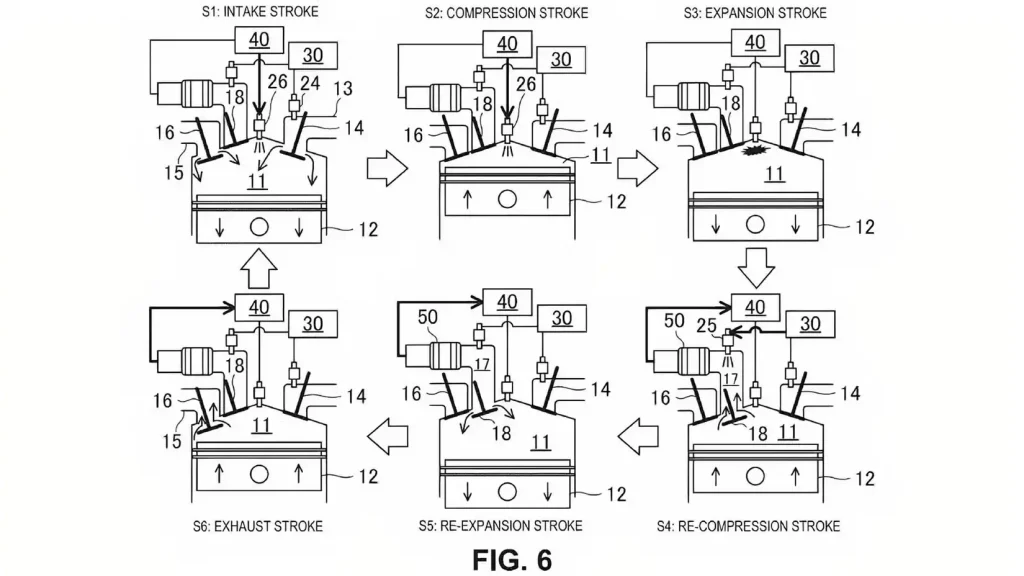
Let’s look at the cycle of the mazda hydrogen six stroke engine patent one step at a time so it is easier to follow. The first stroke is the Intake Stroke, where the piston moves down and pulls in fresh air. This is pretty much exactly like the car you drive today. The second stroke is the Compression Stroke, where the piston moves up and squishes that air. The third stroke is the Power Stroke, where a spark plug ignites the fuel and air, forcing the piston down and giving the car its power.
Everything changes when we get to the fourth stroke, which is the Re-compression Stroke. Usually, this is when the exhaust leaves, but in the mazda hydrogen six stroke engine patent design, the exhaust is trapped. The piston moves up and forces this hot gas through a special valve into the decomposer. Here, the engine adds a tiny bit of fuel to the mix. The heat from the previous explosion is so high that it causes the fuel to break apart into its basic elements.
10 Best Japanese Cars of All Time To Buy In USA
The fifth stroke is called the Re-expansion Stroke. The piston moves back down, and the newly created hydrogen gas is used to help the process. Because hydrogen burns so fast and clean, it can provide extra energy or just help scavenge the cylinder for the next round. Finally, the sixth stroke is the Exhaust Stroke. The piston moves up one last time to clear out the cylinder. This extra long cycle means the engine is squeezing every bit of energy out of the heat that usually just gets wasted out of the back of the car.
The Science of On-Board Fuel Reforming
The big buzzword in the mazda hydrogen six stroke engine patent is “fuel reforming.” This sounds like something you would find at a power plant, not under the hood of a Mazda3. Basically, gasoline is made of hydrocarbons, which are just strings of carbon and hydrogen atoms stuck together. Normally, when we burn gas, those atoms combine with oxygen to make CO2. Mazda’s goal is to break those strings apart before they can turn into CO2 and get released into the air.
By using a catalyst inside the decomposer, the engine can strip the carbon away. Think of the catalyst like a magnet that only wants the carbon. The hydrogen is then free to be used as fuel. This is a huge deal because hydrogen is the “holy grail” of clean energy. When you burn hydrogen, the only thing that comes out is water vapor. The mazda hydrogen six stroke engine patent is essentially trying to turn a regular gas car into a hydrogen car while you are driving down the highway.
Another cool thing about this patent is that it solves the “hydrogen station” problem. Right now, it is hard to own a hydrogen car because there are almost no places to fill them up. With the mazda hydrogen six stroke engine patent, you just put regular gas in the tank. The car does the hard work of making the hydrogen for you. It is a bridge between the old world of fossil fuels and the new world of clean energy that does not require building thousands of new charging or filling stations.

However, we should mention that this process is not 100% perfect yet. Breaking down fuel takes a lot of heat, which is why the engine has to run in a specific way to keep the temperatures between 400 and 800 degrees Celsius. If the engine is too cold, the reaction won’t happen. If it is too hot, it might damage the parts. Mazda’s 2026 updates show they are working on using a hybrid electric system to help manage these temperatures, ensuring the engine stays in the “sweet spot” for as long as possible.
Does Automobile Julien Trustworth or Not For Automotive Service?
Technical Details and Point-by-Point Data
Instead of a table, here are the key details and specifications of the mazda hydrogen six stroke engine patent as described in the latest 2026 filings:
- Engine Type: Internal combustion with 6 distinct strokes per cycle.
- Fuel Source: Standard high-octane gasoline used to generate hydrogen on-board.
- The Decomposer Unit: A specialized chamber containing a non-noble metal catalyst to separate carbon from hydrogen.
- Operating Temperature: Requires a thermal range of 400°C to 800°C for the fuel reforming process to be effective.
- Emission Profile: Designed to produce “near-zero” CO2 during the 6-stroke mode, with the main tailpipe output being nitrogen and water vapor.
- Carbon Storage: A recovery unit that captures solid carbon, which must be emptied during regular vehicle service intervals.
- Hybrid Integration: Likely paired with a 48V or full hybrid system to provide power during the non-combustion strokes.
- Complexity Level: High, featuring additional valves, two types of fuel injectors (one for the cylinder, one for the decomposer), and a carbon collection tank.
The Big Challenge: Dealing with Solid Carbon
While the mazda hydrogen six stroke engine patent sounds amazing, it has one very messy problem. When you strip the carbon out of the gasoline, that carbon does not just disappear. It turns into a solid material, kind of like soot or charcoal. According to engineering experts, for every gallon of gas you burn, you might end up with several pounds of solid carbon. This means your car is going to get heavier as you drive, and you have to store that “trash” somewhere until your next oil change.
Mazda’s patent includes a “carbon recovery unit” which is basically a collection box for this soot. The 2026 discussions around this tech suggest that a 15-gallon tank of gas could produce up to 80 pounds of carbon. That is a lot of extra weight to carry around in the trunk. Mazda suggests that this carbon could be recycled and used for things like making steel or even as a pigment for paint, but for the average driver, it just means another thing that needs to be serviced by a mechanic.
192-97 LT1 Cooling System to Maximize Engine Life
There is also the question of efficiency. It takes energy to break those chemical bonds. If the engine is spending all its time and heat just to make hydrogen, does it actually have enough power left to move the car fast? This is why many people think the mazda hydrogen six stroke engine patent will only be used in hybrid cars. The electric motor can handle the acceleration while the engine sits in the background, quietly churning out clean hydrogen and trapping carbon for later.
2026 Updates and the Path to Production
As of early 2026, Mazda has been very busy with their “Skyactiv-Z” project. This is a new line of engines that focuses on “Lambda One” combustion, which is a fancy way of saying they want the most perfect burn possible. While the mazda hydrogen six stroke engine patent is a separate idea, many experts believe the tech will eventually merge. Mazda is testing these concepts in the Super Taikyu racing series in Japan, which is where they prove their wildest ideas before putting them in a CX-5 or a Mazda3.
The latest 2026 reports show that Mazda is also looking at “synthetic fuels.” These are fuels made in a lab that are already carbon-neutral. If you combine synthetic fuel with the mazda hydrogen six stroke engine patent, you could actually end up with a car that is “carbon negative.” That means the car is actually cleaning the air or capturing more carbon than it creates. It is a wild thought, and it shows that Mazda is not ready to let the gasoline engine die just yet.
We should be realistic, though. A patent is just a legal way of saying “we thought of this first.” It does not always mean a car is coming next year. The complexity of the mazda hydrogen six stroke engine patent is very high. It has more moving parts and more things that can go wrong compared to a normal engine. However, Mazda has a history of making “impossible” engines work. If anyone can figure out how to put a chemical refinery inside a car engine, it is probably them.
10 Timing Belt Symptoms And Fix Solutions At American Local Garage
Is This the End of Electric Vehicles?
Some people are saying that the mazda hydrogen six stroke engine patent could “kill” the EV revolution. That might be a bit of an exaggeration. Electric cars are getting better every day, and they are very simple to maintain. Mazda’s six-stroke engine is the opposite of simple. It is a complex, high-tech machine that requires a lot of care. But for people who live in places where there are no chargers, or for people who just love the sound of an engine, this could be a perfect middle ground.
The real value of the mazda hydrogen six stroke engine patent is that it gives us a choice. It says that we don’t have to follow just one path to a cleaner planet. We can use electricity, we can use hydrogen, and we can even use evolved versions of the gas engines we have loved for over a hundred years. Mazda is betting that there is still a lot of life left in the piston and the crank, and honestly, the world of cars is a lot more interesting because they are willing to take that bet.
Final Thoughts on Mazda’s Innovation
Looking at the mazda hydrogen six stroke engine patent in 2026, it is clear that the automotive industry is in a very creative phase. We are seeing ideas that would have seemed like science fiction just ten years ago. Mazda’s willingness to experiment with extra strokes and on-board fuel reforming shows that they still value engineering over everything else. They want to find a way to keep the “soul” of the car alive while still being responsible to the environment.
Whether we see this engine in a production car by 2028 or if it stays in the patent office, it teaches us a lot. It shows that the “perfect” solution for cars has not been found yet. As we move further into the 2020s, we should keep an eye on these weird and wonderful designs. The mazda hydrogen six stroke engine patent is a reminder that as long as there are engineers with a dream and a wrench, the internal combustion engine is not going anywhere without a fight.
More Automotive Update Visit Deckers Auto