If you have ever stood at the bus stop on a chilly morning, watching that big yellow bus pull up, you might have wondered about something. You buckle your kids into the car every single day, right? It is the law, and it is common sense. But then, they hop onto a 30,000 pound vehicle that does not have a single seatbelt in sight. It feels weird, honestly. As we move through 2026, the question of why don’t school buses have seatbelts is still one of the most searched topics by worried parents and car enthusiasts alike here at Deckers Auto.
To understand this, we have to look past what we think we know about car crashes. A school bus is not just a big van, it is a specialized piece of engineering designed to protect children in a very specific way. While it might look like the school system is just being cheap, there is actually a lot of science involved in the “no belt” policy. Let’s dive into the details and see what the latest 2026 updates tell us about the safety of our kids.
Best Automotive Schools Near Me in USA
Understanding Compartmentalization: Why Don’t School Buses Have Seatbelts by Design?
The biggest reason you do not see seatbelts on large buses is a concept called compartmentalization. I know, that is a big word, but it is actually a very simple idea. Think about an egg carton.
The eggs are not buckled in, but they stay safe because they are tucked into soft, padded compartments. If the carton drops, the egg hits the soft wall of its own little space, which absorbs the shock.
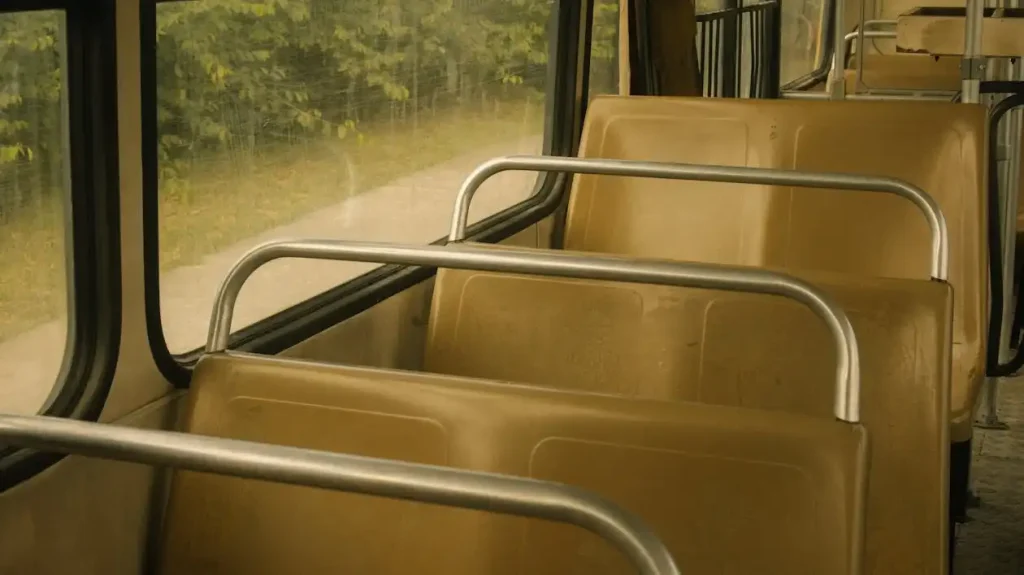
School buses are built exactly like that. The seats are spaced very closely together, and the backs of the seats are extra tall and extra padded. If the bus stops suddenly or gets into a crash, the student is thrown forward into a soft, flexible seat back.
This absorbs the energy of the impact. Because the seats are so high and padded, the child stays “contained” within their seating area. This is the primary answer to why don’t school buses have seatbelts, because the seat itself is the safety device.
In 2026, engineers have improved this padding even more. The materials used in modern bus seats are now better at absorbing energy than they were ten years ago. They use high density foam that does not just stop a child, but slows them down gently. This reduces the risk of neck and head injuries, which are the biggest concerns in a frontal collision.
The 2026 Perspective on Why Don’t School Buses Have Seatbelts
As we look at the data from the start of 2026, things are starting to change slightly, but the core safety philosophy remains. The National Highway Traffic Safety Administration (NHTSA) has maintained that school buses are the safest vehicles on the road. In fact, children are about 70 times more likely to get to school safely in a bus than in a passenger car.
However, many states are now looking at “three point” seatbelts, the kind you have in your car. Some parents ask, if compartmentalization is so good, why not add belts too? The problem is that adding belts to a bus designed for compartmentalization can actually be dangerous. If a child wears a lap belt only, their upper body can fly forward while their waist stays put, which can cause serious internal injuries. To do it right, you need the shoulder straps, which are expensive and hard to fit for kids of all different heights.
In 2026, we are seeing more “smart buses” being introduced in states like California and New York. These buses have adjustable shoulder belts that can slide up or down based on how tall the student is. While this is great, it is not yet the standard for every school district because of the massive costs involved in replacing entire fleets.
New Legislation and Safety Technology in 2026
This year, there has been a big push in the federal government to look at the “School Bus Safety Act” once again. The 2026 update to this discussion focuses on side impact crashes. While compartmentalization is amazing for front and back crashes, it does not offer as much protection if a bus is hit from the side or if it rolls over.
Because of this, some new 2026 models are being equipped with side curtain airbags, similar to what you find in luxury SUVs. This adds another layer of protection without requiring every student to be buckled in perfectly. It is a tech heavy solution to an old problem. I think it is pretty cool that we are finding ways to use technology to keep the “no belt” system while making it even safer for the kids.
Small vs. Large Buses: Why Don’t School Buses Have Seatbelts on Every Model?
It is important to notice that not all school buses are the same. Have you ever noticed that the smaller “short buses” actually do have seatbelts? There is a very good reason for this. Small buses are lighter and they do not have the same “mass” advantage as a full sized bus. In a crash, a small bus behaves more like a van or a large SUV.
Because they are smaller, they can be pushed around more easily by another vehicle. This means the egg carton theory (compartmentalization) does not work as well. In these smaller vehicles, seatbelts are required by federal law because the force of an impact is much higher for the passengers. So, if you see a small bus, you will see belts. But on the big 72 passenger yellow giants, the physics are just different.
The weight of a large bus is its greatest safety feature. When a 15 ton bus hits a 2 ton car, the bus hardly moves, while the car takes all the damage. This means the children inside the bus feel much less force than the people in the car. This physical reality is a huge part of why don’t school buses have seatbelts in the traditional sense.
Practical Challenges and Costs of Retrofitting
If we decided tomorrow that every bus must have seatbelts, the cost would be astronomical. To retrofit an old bus with 3 point harnesses can cost between $7,000 and $10,000 per bus. For a school district with 500 buses, that is money they usually do not have. Most districts would rather spend that money on better teachers or newer engines.
Also, there is the “driver factor.” Imagine a bus driver with 60 screaming kids behind them. If seatbelts were mandatory, the driver would have to check every single child to make sure they are buckled correctly.
If a kid unbuckles halfway through the route, is the driver responsible? In 2026, some districts are testing AI cameras that alert the driver if a student is not buckled, but this tech is still in the early stages and very expensive.
Basic Facts: Comparing Bus Safety Features
Instead of a table, let’s look at the specific points that compare the current safety standards we see in 2026. This helps explain the trade offs school districts make every day.
- Impact Protection: Large buses use high back, energy absorbing seats to create a safety zone, whereas passenger cars rely entirely on the seatbelt and airbag to stop forward movement.
- Emergency Evacuation: One of the scariest parts of seatbelts on buses is a fire or a water landing. In an emergency, a driver might have to get 50 kids off a bus in less than 90 seconds. If those kids are tangled in seatbelts, or if the belts are jammed, the result could be tragic.
- Student Behavior: Believe it or not, seatbelts can sometimes be used as “weapons” by students. Heavy metal buckles can be swung around, which is why some schools prefer the padded environment of a standard bus.
- Seat Capacity: Adding three point seatbelts often means you can only fit two kids to a seat instead of three. This would mean schools need more buses on the road, which actually increases the risk of accidents because there are more vehicles out there.
- The 2026 Tech Factor: New buses are now being built with “electronic stability control” which helps prevent the bus from flipping over in the first place. This is seen by many experts as more important than adding seatbelts.
Why Don’t School Buses Have Seatbelts: The Parent’s Dilemma
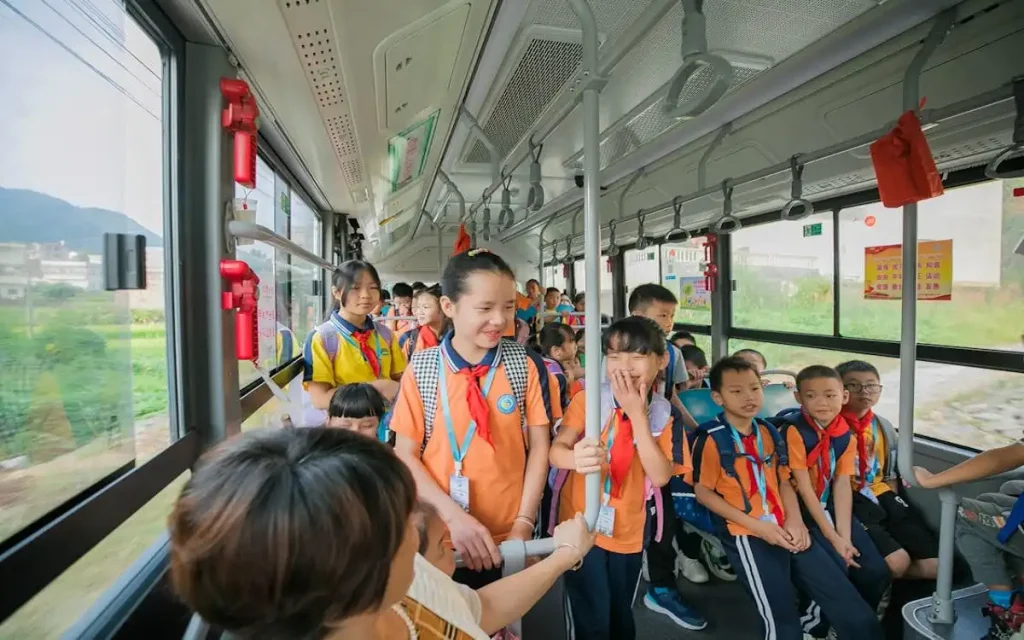
It is totally normal to feel a bit nervous about this. We are told from day one that belts save lives. And they do! But the school bus is a statistical anomaly. It is the one place where the rules of the road change because the vehicle itself is so massive and well designed.
As we move through 2026, you might start seeing more “lap shoulder” belts in your local district as older buses are retired. But if your child’s bus does not have them, do not panic. The padding, the height of the bus, and the specialized driver training all work together to keep them safe.
I think the most important thing for parents to do is to teach their kids bus etiquette. Sitting forward, keeping their feet out of the aisle, and staying seated until the bus stops is actually more important for their safety than a belt would be in most cases. When kids sit properly, the compartmentalisation works exactly the way it was designed to.
Finally
So, why don’t school buses have seatbelts? It is a mix of clever engineering, physics, and practical safety concerns like evacuation speed. While the 2026 updates show us that technology is moving toward more belts in the future, the current system is already incredibly safe. The yellow school bus remains a marvel of safety design, even without the clicking sound of a seatbelt.
At Deckers Auto, we love talking about vehicle safety and the “why” behind how things are built. Whether it is your family SUV or the local school bus, knowing the facts helps everyone breathe a little easier. The next time you see that yellow bus, just remember, it is a giant, rolling egg carton designed to keep its precious cargo safe and sound, no matter what.
More Automotive Update Visit Deckers Auto