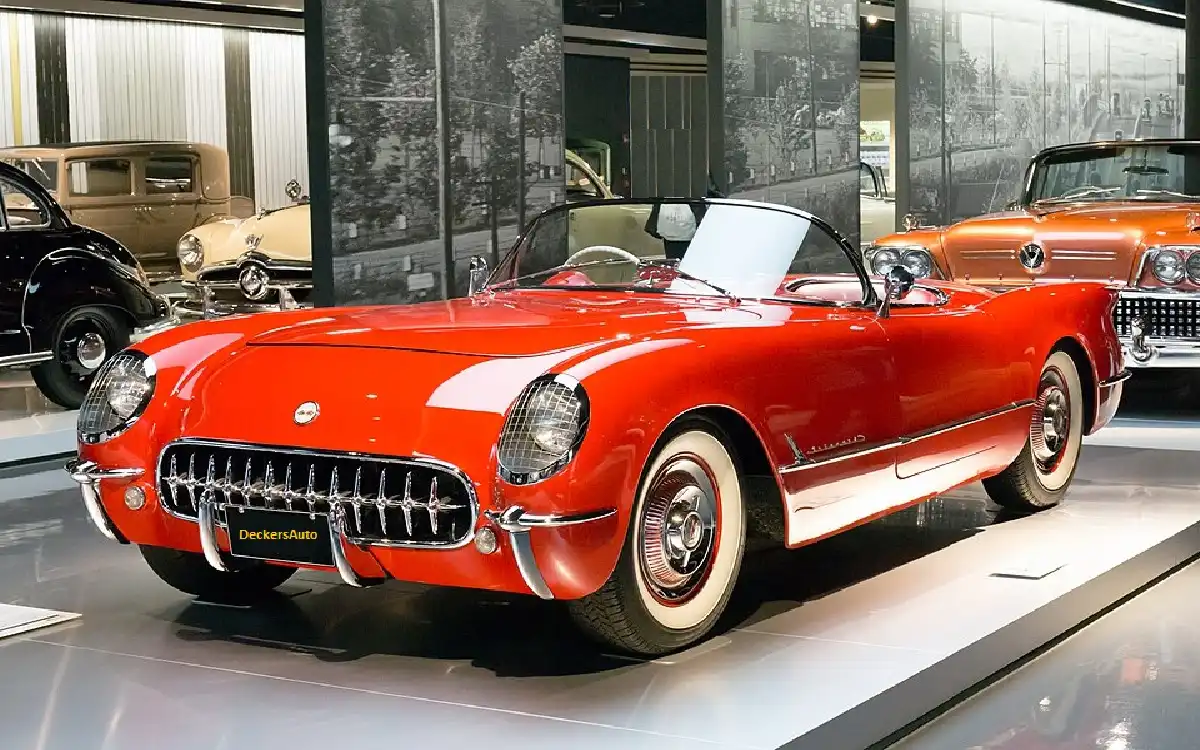
The 1953 Corvette represents itself as a pivotal moment in history as it captured the essence of an auto industry icon and continues to dazzle the world and the eyes of onlookers today. The legacy of The Corvette, in the first-generation and dubbed the C1, initiated an era of speed, style, and innovation as it became part of a legacy that boasts and continues to ignite passion and thrill in the hearts of drivers around the world.
The Birth OfAn Icon
On January 17th, General Motors launched the 1953 C1 Corvette on its first Motorama auto tour event in New York’s Waldorf-Astoria ballroom. The summer tour of the 1953 Corvette, and its sleek new female-looking design, drew praise and excitement as it traveled to over 4 million people in 14 major US cities and gained attention to the Corvette as America’s answer to European sports cars such as the Jaguar and MG. Harley Earl, the design chief at GM, led a secret design project named project OPAL that, first as a concept by then as a design, would be an affordable 2-seat sports car.
As of today, of the 285 Corvettes produced, only about 200 stimulate the trade and rare curiosities for collectors around the world.
Names of the C1 Corvette
The name was the design of Myron Scott at GM pr named after the Corvette ship that has a C in front and is a 2-mast ship.
While naming the line of Chevrolet vehicles, some suggestions, including 1953 Corvette, after a British WWII fast corvette classed warship, were selected. I was, after all, the only name when the Chevrolet Sportscar had to be displayed, to evoke all the attributes of performance, speed, and agility.
Technical Breakdown
In the summer of 1953, dealerships received a highly anticipated shipment of the Corvette. The Chevrolet Corvette became a fully recognized model, fully endorsed by the GM corporation, and available for purchase at the price of $3,498, or about $42,000 in today’s dollars. Customers could expect a fully day to day drivable vehicle at a price accessible to the average American, with the speed and agility of a true sportscar.
A vintage ‘1953 Corvette paired the 292 cu (4.8 L) “Blue Flame” straight-six engine, a high-compression version of Chevy’s old Stovebolt truck powerplant from 1929 with a vintage ’53 Corvette at 4,200 rpm. Torque was 224lb.ft by 2,400. Power came from a set of 3 side-carb Carter carbs.
A 292 cu (4.8 L) “Blue Flame” straight-six engine paired with a 2 speed Powerglide automatic transmission and 3.55:1. It reached a top speed of 108mph.
| Category | Details |
| Engine | 235.5 ci OHV I-6, 150 hp @ 4200 rpm |
| Torque | 223 lb-ft @ 2400 rpm |
| Transmission | 2-speed Powerglide automatic |
| Wheelbase | 102 inches |
| Length/Width/Height | 167 / 72.2 / 52.1 inches |
| Curb Weight | 2,850 lbs |
| Top Speed | ~108 mph |
| Original Price | $3,498 |
Shocks were placed above the tires on the rear Hotchkiss drive. The front was fully independent suspension.
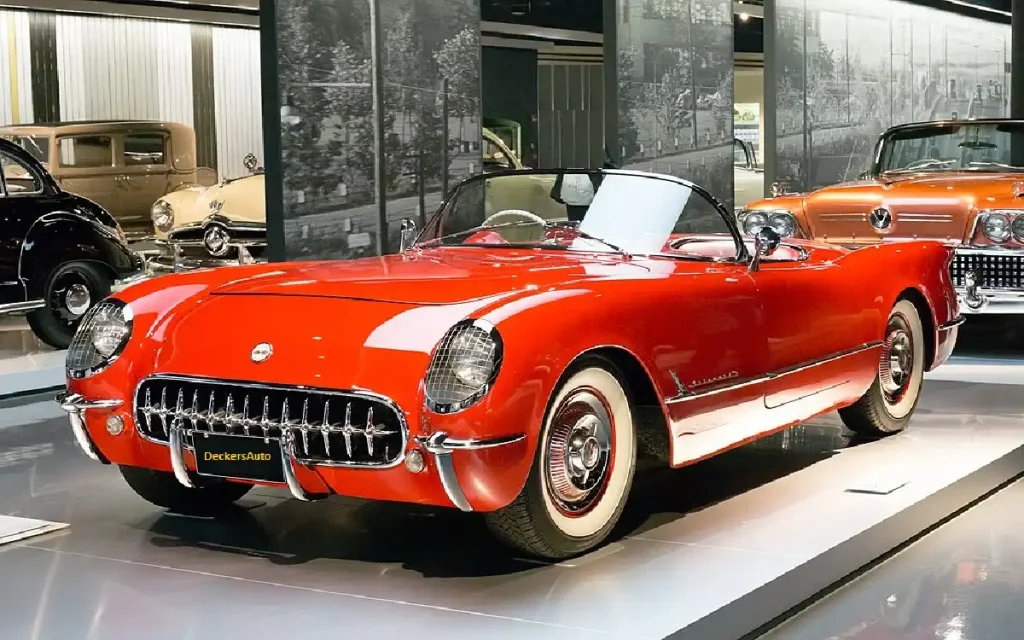
Every 1953 Corvette was dressed in a fully white and red with white wall tires. They were all equipped with a basic set of a speedo and tach, a fuel and water gauge, and basic. They were all equipped with a basic set of a speedo and tach, a fuel and water gauge, and basic. They were all equipped with a basic set of a speedo and tach, a fuel and water gauge, and basic.
Some were ordered with the heater, and a radio would hear some joys. A radio or a heater was included in the luxuries, as a heater was.
Here’s a quick specs table for the 1953 Corvette:
The 1953 Corvette was also the rarest in the entire lineup produced, as only 300 of the 1953 model were constructed.The first retail transaction in history occurred in July 1953 with DuPont president Crawford Greenewalt. His vehicle, with a serial number of 005, is anticipated to auction in 2025 for an estimated $250,000. However, a much higher value is apprehended.
The weak economy, coupled with the unstable fiberglass, which easily cracked, caused weak sales, which contributed to the low survival rates. Only 300 of the originally planned 10,000units sold. Many of the surviving products rusted or were scrapped. However, the surviving products, which can be found today, are sold for six figure amounts.
The Newest Buzz in 2025
In October of 2025, General Motors (GM) News put out a news article celebrating the 1953 Corvette model, which is now 72 years old. They had a section in the news called “Retro Rides” and featured the Corvette and gave a brief history of the Motorama debut and the then revolutionary fiberglass body, in contrast to the modern 2026 ZR1X with 1,250 horsepower.
The auction market for automobiles is still strong, which is evidenced by the emergence of the VIN 005 completing a full restoration in Polo White. This vehicle prompted live bidding at a car show in Texas, and a collection of VIN (Vehicle Identification Number) 100 was prepared for the Carlisle Auctions, which shows the high demand for vintage vehicles.
The thrived retromods and replicas, which are vintage replicas, made with new parts, especially those made in 2025 for a concours event. The design and innovative features made for the 1953 model Corvette were made with 8-cylinder powered engines and blended the styling of the 53 model.
The Design and Innovative features of the 1953 Corvette
The body of the Corvette was made of fiberglass and contributed to the overall weight of the vehicle being 2,850 pounds. Overall, the fiberglass body was much better than a steel body because it did not rust, and it was dent resistant, which are two huge drawbacks of steel. The fiberglass controls denting, which is a huge design flaw in steel. The Corvette was designed with a long hood and a short body and featured gullwing style doors, which was a first. Those features worked to bring overall design to each model and fiberglass bodies were featured in every 1953 Corvettemodel made in the future.
While considered underpowered by today’s metrics, it demonstrated that Americans could design and construct sports automobiles with skis and windshield wipers, and turn signals, all standard attributes.
Thomas Keating, with Chevrolet, dubbed it a sports car, “In the American Tradition, [with its] beauty, ease, and pep for the masses.”
THE LEGACY CONTINUES
From start (the Motorama) to professional (Auto Shows), the 1953 Corvette opened the door to the production of V8s (1956), coupe models (1963) and today’s \midengined marvels. The spirit of the original lives with every revolt of the now 1.9 M Corvettes sold.
Reminders of pioneering risks, one of prototypes met a grim fate in a flammability test, and another was scrapped. For enthusiasts, the 1953 Corvettes are history memorabilia, and it, for some, holds the spirit of motivation.
More Automotive Update Visit Deckers Auto